Gold struggling to catch a bid even as U.S. pending home sales drop 7.3%

(Kitco News) – The gold market continues to struggle to attract safe-haven demand, even as the U.S. housing market loses significant momentum, with the number of Americans planning to buy a home dropping sharply in September.The U.S. Pending Home Sales Index dropped 7.3% last month, the National Association of Realtors (NAR) announced Tuesday. The data was significantly worse than expected, as economists had forecast a decline of only 0.6%.The NAR said that weakness in the housing sector is broad-based, with all regions reporting monthly and annual declines.“Market conditions weakened in September due to fast-rising mortgage rates,” said NAR Chief Economist Dr. Lawrence Yun. “Although job growth and income gains can support home purchases, housing affordability is more affected by changes in mortgage rates.”The gold market is showing little reaction to the disappointing housing data. The precious metal continues to struggle in the face of persistent inflationary pressures and elevated bond yields.
Tokenized gold could unlock $700 billion new demand

(Kitco News) – Digital gold is emerging as a new pillar of support for the precious metal, and although the market remains in its infancy, the World Gold Council sees an opportunity to unlock hundreds of billions of dollars in new investment demand by transforming the ways that gold is owned, traded and used throughout the global financial system.In a white paper titled Digital Gold: The Case for a Shared Infrastructure, developed with Boston Consulting Group, the World Gold Council (WGC) said the industry is approaching a critical turning point as digital innovation creates new opportunities to expand gold’s role beyond a traditional store of value.”Our modelling suggests that if stakeholders address the principal barriers to adoption, they can boost both participation and portfolio allocations, unlocking up to $700 billion in latent demand. Fully realised, this would create a market that broadly matches physically-backed gold ETFs today,” the report said.The potential is significant. According to the WGC, the market capitalization of tokenized gold surpassed $4 billion in 2025, representing only a fraction of the broader gold investment market. At the same time, gold-backed exchange-traded funds attracted $89 billion in inflows last year, pushing total assets under management to $559 billion.The WGC noted that gold ETFs accounted for 16% of annual gold demand in 2025, highlighting the growing importance of digitally accessible investment products in supporting the precious metal.However, the organization said the next phase of digital gold’s evolution will depend on creating the infrastructure needed to make gold more accessible, transferable and useful across financial markets.The WGC is developing its platform “Gold as a Service,” which would connect physical gold custody and vaulting operations with digital issuance, settlement and redemption systems.Rather than creating another gold investment product, the initiative aims to establish shared infrastructure that banks, financial technology companies, bullion dealers and other institutions can use to develop their own digital gold offerings.The WGC said this approach could reduce the substantial costs and operational complexity associated with launching digital gold products, while also improving transparency, liquidity and investor confidence.The initiative could also create new opportunities for gold to be used as collateral, transferred between financial institutions and integrated into digital payment systems.The growing potential of the tokenized gold marketplace was a major topic of discussion during the London Bullion Market Association’s annual conference earlier this month.During a panel discussion on digital gold, Mike Oswin, global head of market structure and innovation at the World Gold Council, said the industry is approaching an important inflection point as traditional financial institutions increasingly embrace tokenization.Oswin noted that the retail vaulted-gold and tokenized-gold market currently represents an estimated $50 billion to $60 billion, compared with a broader retail gold investment market of approximately $6 trillion to $7 trillion.The disparity highlights the substantial room for digital gold products to expand their market share.Oswin explained that the industry’s challenge is ensuring that gold remains relevant as traditional finance increasingly converges with decentralized financial technology.”We can’t let it fall behind,” he said.Although gold is a physical asset that must be securely stored and managed, Oswin said new technology could make those holdings more useful without sacrificing the security and trust that have historically supported the market.One of the biggest opportunities is turning gold from a passive investment into an asset that can generate greater financial utility.Vincent Domien, head of precious metals trading at ICBC Standard Bank, told delegates at the LBMA conference that tokenization could dramatically expand gold’s role in institutional financial markets.He explained that although gold is widely held as a strategic asset, its physical nature makes it difficult to use efficiently as collateral.”You have this dead asset on your balance sheet doing absolutely nothing for you,” he said.Domien argued that making gold easier to transfer and pledge as collateral could encourage institutions to hold and use more of the precious metal.”If you’re able to tokenize gold and everybody’s able to instantly use it, then suddenly you increase dramatically the use of gold,” he said.The WGC shares this view, noting that a more efficient digital infrastructure could allow investors to access liquidity without selling their underlying gold holdings.For example, investors could pledge digital gold as collateral for a loan while maintaining ownership of the precious metal, potentially expanding its appeal as both a long-term store of value and a source of liquidity.Oswin said during the LBMA discussion that modernizing gold’s collateral infrastructure could release billions of dollars in previously underutilized assets into financial markets.However, the potential extends beyond institutional investors.James Willis, global head of precious metal sales at HSBC, said the bank’s experience launching a digital gold token in Hong Kong demonstrated that new investment formats could attract customers who had previously avoided traditional gold products.Willis explained that customers were attracted to the simplicity of purchasing gold through their banking applications and transferring it to friends and family.”The HSBC token in Hong Kong did generate a lot of new clients coming in and buying gold from us,” he said.The WGC said digital gold products offering smaller investment minimums, simplified transactions and easier access through mobile platforms could help attract younger investors.However, despite the growing opportunities, significant challenges remain.The report warned that the digital gold market is highly fragmented, with different platforms operating under varying custody arrangements, redemption requirements and regulatory frameworks.The lack of common standards makes it difficult for investors to move their holdings between platforms and creates uncertainty over whether digital products are fully backed by physical gold.The WGC also noted that launching a digital gold product can require tens of millions of dollars in upfront development costs, creating substantial barriers to entry.The proposed Gold as a Service platform is intended to address these challenges by providing a common foundation for physical custody, digital issuance, compliance and redemption.The WGC emphasized that physical redemption remains particularly important for investors, even if they have no intention of taking delivery of their gold.During the LBMA panel, Oswin explained that investors want confidence that their digital holdings represent real metal stored securely in a vault.The organization believes improved auditing, transparency and reconciliation between physical holdings and digital records could strengthen investor confidence and accelerate adoption.In the report, WGC Chief Executive David Tait said the industry must embrace innovation while preserving the fundamental characteristics that have supported gold’s role in the financial system for centuries.”Today, we stand at a crossroads: gold must adapt to operate confidently within an ever-expanding digital financial system, while remaining true to its physical foundations,” he said.The organization stressed that its initiative is not intended to replace traditional physical gold investment or existing financial products.Instead, the objective is to establish another structural source of demand by making gold more useful within the modern financial system.See live precious metals prices for gold, silver, platinum and palladium — in USD, CAD and 12 more currencies.
Heliostar drilling strengthens Ana Paula growth case

Heliostar Metals (TSX: HSTR; US-OTC: HSTXF) has intersected gold below the planned workings of its Ana Paula project in Mexico, pointing to expansion potential as it prepares a feasibility study…
Mauritania’s first uranium mine comes into view despite funding, security issues

Aura Energy (ASX: AEE; AIM: AURA) is moving closer to building Mauritania’s first uranium mine after a bankable feasibility study outlined a $500-million (C$701.9 million) valuation for its Tiris project,…
Cytrence Launches Kiwi+ VGA, Simplifying IT Maintenance for Servers and Industrial Computers
Portable USB 3 KVM combines native VGA support, specialized server boot resolutions, switchable USB storage, and simplified connectivity for IT professionals
BURLINGTON, MA, UNITED STATES, October 20, 2026 /EINPresswire.com/ — Cytrence Technologies Inc …
MLC Dharmendra Bhardwaj announces a Meerut Founders’ Desk for First-Time Youth Entrepreneurs
MLC Dharmendra Bhardwaj’s Founders’ Desk will guide Meerut entrepreneurs from idea to bank sanction, as part of a five-point compact on loans, skills, jobs.
MEERUT, UTTAR PRADESH, INDIA, October 20, 2026 /EINPresswire.com/ — MLC Dharmendra Bhardwaj, …
Antofagasta’s Centinela strike ends after deal with unionsmining.com
Antofagasta said it had managed to maintain production at normal levels, avoiding any negative impact from the strike.
U.S. consumers suffering highest financial stress since COVID as rising debt masks growing economic pain
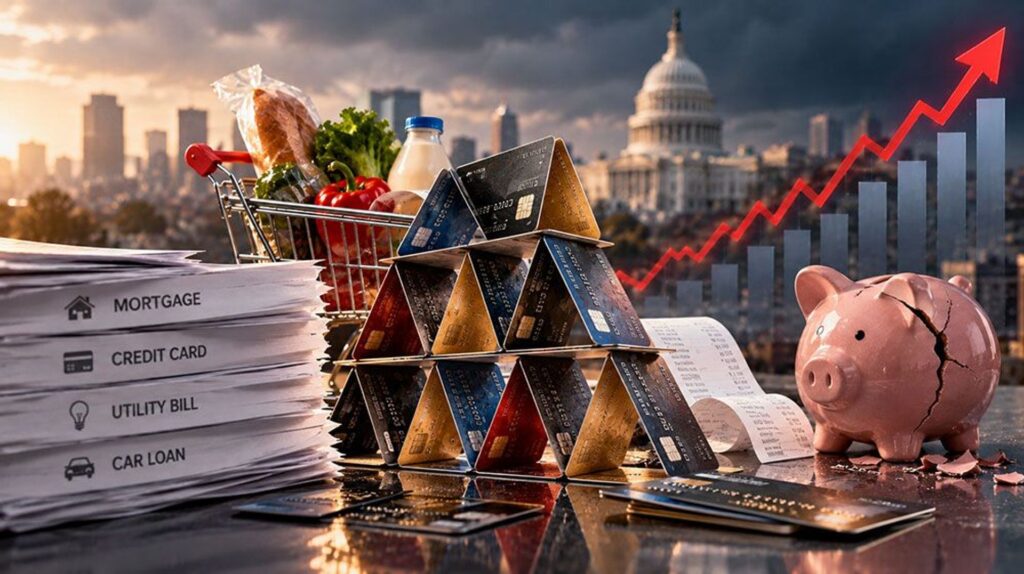
(Kitco News) – American consumers are facing mounting financial pressure as persistent inflation, higher borrowing costs and record household debt take their toll, but one market analyst warns that traditional economic indicators may be masking the true extent of the deterioration in household finances.In an interview with Kitco News, Matt Layton, senior vice president of consumer analytics at LegalShield, warned that continued consumer spending is giving economists and policymakers a potentially misleading picture of the U.S. economy as more Americans rely on credit to maintain their standard of living.His comments come as LegalShield’s latest Consumer Stress Legal Index (CSLI) rose to 75.7 in September, its highest level since March 2020. The index increased 6.3% from a year earlier and 1.5% from the end of the second quarter.More importantly, the index has now recorded 27 consecutive months of year-over-year increases, the second-longest streak in its 24-year history. The only longer period was the 34-month stretch between November 2006 and August 2009, which encompassed the Great Recession.Layton said the sustained increase in financial stress is particularly concerning because it has developed gradually, without the kind of dramatic economic shock that typically attracts attention from policymakers and financial markets.”This is long-term pain for the everyday consumer,” he said.Unlike the financial crisis of 2008 or the COVID-19 pandemic, when financial stress increased sharply over a relatively short period, Layton explained that the current deterioration reflects a prolonged erosion of household purchasing power.He said consumers are increasingly finding themselves running out of money earlier each month as they struggle to manage everyday expenses and recurring bills.”Nothing in our data suggests that any improvement is on the near-term horizon for these specific issues where consumers are, you know, looking at their budget around the kitchen table, which bills can I pay, which bills can I put off?” he said.Although the current trend bears some resemblance to the buildup of financial stress before the Great Recession, LegalShield’s report shows that the deterioration has been considerably slower.Over the current 27-month period, the composite index has increased 22%, compared with a 40% increase during the first 27 months of the 2006–2009 period.The index also remains at roughly 60% of its December 2008 peak of 125.2.Layton emphasized that LegalShield is not forecasting a recession. However, he said the similarities between the two periods demonstrate how financial pressures can accumulate over an extended period without producing an immediate economic crisis.The latest report also highlights a growing disconnect between traditional consumer confidence surveys and actual household financial behavior.The Conference Board’s Consumer Confidence Index fell to 81.9 in September, its lowest level since 2014. At the same time, more consumers described their family finances as bad than good, according to the survey.Unlike traditional sentiment indicators, LegalShield’s index measures actual requests for legal assistance. The company analyzes approximately 150,000 monthly calls from U.S. consumers seeking help with financial issues, including bankruptcy, foreclosure and consumer finance disputes.”Confidence surveys tell you how people feel. Our data show what people are doing about it,” Layton said in the report. “When a growing share of our members’ calls are about losing a home, filing for bankruptcy or dealing with consumer debt, the strain has moved past worry and into action.”For Layton, one of the biggest concerns is that economists and financial markets continue to rely heavily on consumer spending to assess the health of the U.S. economy.Consumer spending accounts for more than two-thirds of U.S. economic activity, making it a critical indicator of economic growth. However, Layton argued that growing access to credit, including buy now, pay later services, could be allowing households to maintain spending even as their underlying financial position deteriorates.”I fully believe that consumer spending numbers are no longer an adequate measurement of the financial health of the everyday consumer,” he said.He explained that consumers increasingly have access to alternative forms of credit, allowing them to continue purchasing necessities even when their incomes are insufficient to cover their expenses.He questioned whether this borrowing is artificially supporting consumer spending figures and delaying a more visible economic adjustment.”Are we just kicking the can down the road and, you know, the budget of the consumer is just going to explode at some point?” he asked.The latest household debt figures reinforce some of these concerns.According to Federal Reserve Bank of New York data cited in LegalShield’s report, total U.S. household debt reached $18.77 trillion in the second quarter of 2026, an increase of $383 billion from a year earlier.Meanwhile, the annualized share of credit card balances transitioning into serious delinquency stood at 6.97%, roughly unchanged from the previous year.LegalShield’s Consumer Finance Index, which tracks legal requests involving billing disputes, collections, repossessions and creditor negotiations, rose 4.5% during the third quarter to 112.5.The index is now approximately 6% above its July 2007 level, recorded ahead of the Great Recession, although it remains below the peak reached during the pandemic.The report noted that consumer finance issues accounted for most of the composite index’s quarterly increase.”When the pandemic hit, consumer finance calls jumped almost overnight,” Layton said in the report. “This time there is no single shock. Consumer finance is above anything we recorded during the Great Recession, and it moved higher again this quarter.”Financial pressure is also becoming increasingly evident in the housing market.LegalShield’s Foreclosure Index rose 14.8% from a year earlier to 52.6 in September, representing the largest annual increase among the three components of the consumer stress index.Ben Farrow, a LegalShield provider attorney and partner at Anderson, Williams, & Farrow, said many homeowners seeking legal assistance are struggling with rising essential expenses rather than excessive discretionary spending.”The homeowners calling us budgeted and did the right things, but inflation is eating into their income and then their insurance doubled,” he said. “They’re not buying Porsches and ribeyes. Things just cost too much, and there’s not much left in the piggy bank.”The deterioration in household finances is also raising concerns about a further increase in personal bankruptcies.LegalShield’s Bankruptcy Index averaged 41.0 during the third quarter, an increase of 14.3% from the same period last year and its highest quarterly average since late 2019.The quarterly index has now risen on an annual basis for 17 consecutive quarters, the longest such stretch on record.The report noted that the Bankruptcy Index has more than doubled since the Federal Reserve began raising interest rates in March 2022.Layton said LegalShield’s historical data suggest that bankruptcy filings could continue rising into next year.”Historically, our Bankruptcy Index has led federal court filings by about two quarters,” he said. “The data point to filings continuing to rise into early 2027.”Despite the growing financial strain, Layton said the gradual pace of deterioration could help explain why the problem has not generated a stronger response from policymakers.Although he acknowledged that there is no obvious policy solution, Layton said the absence of a sudden spike in financial stress could mean the economy has more time to adjust than it did during previous crises.
Gold’s path to $6,000 and silver’s return above $90 depend on renewed investor confidence

(Kitco News) – Gold prices continue to struggle as persistent inflation and rising interest rates drive investors toward higher-yielding assets; however, one precious metals analyst says the market is consolidating rather than entering a bear market, with the structural drivers that supported last year’s historic rally remaining firmly intact.In an interview with Kitco News, Matthew Piggott, Director of Gold and Silver at Metals Focus, said that although investors have become increasingly cautious, institutional and central bank buying continues to support gold above $4,000 an ounce.His comments come as Metals Focus forecasts gold prices will average $5,330 an ounce in 2027, a 16% increase from this year’s projected average of $4,600. The British research firm expects gold to average $5,600 in the fourth quarter of next year, with prices potentially approaching $6,000.At the same time, Metals Focus expects silver to regain its investment appeal, with prices averaging $84.40 an ounce next year and rising above $90 in the fourth quarter.Piggott explained that gold’s inability to sustain a rally since its correction earlier this year reflects competition for investment capital rather than a fundamental deterioration in the precious metal’s long-term outlook.Investors have increasingly focused on opportunities in equities, cryptocurrencies, energy and other commodities, while elevated bond yields have increased the opportunity cost of holding non-yielding assets.However, Piggott noted that institutional investors have consistently returned to the gold market when prices have fallen toward $4,000 an ounce.”So we’ve had kind of a floor established, and central banks have been a big part of that too,” he said.Piggott added that the underlying economic and geopolitical factors that supported gold’s rally in 2025 have not disappeared. If anything, he argued, growing government debt and fiscal uncertainty have strengthened the longer-term investment case.The challenge is that these structural drivers have been overshadowed by more immediate concerns about inflation, energy prices and monetary policy.Piggott explained that concerns about de-dollarization, government debt and fiscal sustainability remain important reasons for institutional investors to hold gold, even as speculative interest has weakened.The Metal Focus report reinforces that outlook, noting that large government deficits, rising debt-servicing costs and uncertainty surrounding U.S. economic policy should continue encouraging diversification away from traditional dollar-denominated assets.The analysts also expect central banks to remain substantial net buyers of gold in 2027, even though official-sector purchases have moderated from the exceptional levels seen between 2022 and 2024.Despite his bullish longer-term outlook, Piggott said the ongoing conflict in the Middle East remains a significant obstacle to renewed investment demand.He explained that elevated energy prices have created a complicated environment for precious metals by driving inflation higher, strengthening the U.S. dollar and reinforcing expectations that central banks will maintain restrictive monetary policies.Although higher inflation can theoretically support gold when it reduces real interest rates, Piggott noted that the relationship becomes more complicated when rising energy prices simultaneously support the dollar.He said investors will need to see tangible progress toward resolving the Middle East conflict before becoming more confident about buying gold and silver during rallies rather than simply purchasing price dips.”To remove that pressure of inflation, you’ve got to see something give on the energy side and for things to calm down on the energy side,” he said.Piggott added that even temporary progress toward negotiations could improve sentiment, although investors have become increasingly skeptical of diplomatic announcements that fail to produce lasting changes.The risk, he warned, is that the conflict could escalate again following the U.S. midterm elections, prolonging energy-driven inflation and keeping monetary policy expectations elevated.Nevertheless, Metals Focus does not expect the Federal Reserve to embark on a prolonged tightening cycle. The consultancy argues that aggressive rate hikes would increase the risk of a sharper economic slowdown, eventually reinforcing demand for gold as a portfolio diversifier.Piggott said Metals Focus continues to expect gold’s rally to resume in the fourth quarter, although the timing has been pushed back as the Middle East conflict has dragged on.”The way our price forecast has evolved is we’ve been pushing the rally resumption back as the conflict has extended and carried on,” he said.He added that the precious metal’s resilience is particularly noteworthy given how dramatically the monetary policy outlook has changed.”The bottom hasn’t fallen out of gold, even though we have swung from a position of expecting multiple rate cuts to multiple rate hikes,” he said.Beyond an improvement in geopolitical sentiment, Piggott expects seasonal physical demand to provide additional support through the final months of the year.He noted that retail investment demand for gold and silver bars and coins has been relatively subdued since the initial surge in January, with substantial selling back to dealers offsetting new purchases.However, he expects seasonal buying in markets such as China and India to help improve physical investment demand.Silver’s rally to $90 will depend on investors, not industrial demandWhile gold’s outlook remains supported by central bank purchases and concerns about fiscal sustainability, Piggott said silver faces a more complicated fundamental environment.Metals Focus expects silver prices to average $84.40 an ounce in 2027, a 16% increase from this year’s projected average of $72.60, with prices rising above $90 in the fourth quarter of next year.However, the consultancy forecasts that silver’s physical market will shift from a deficit of 35.4 million ounces this year to a surplus of 37.3 million ounces in 2027.The expected improvement in supply comes as elevated prices encourage industrial users to reduce their consumption of silver, particularly in the photovoltaic sector.Piggott explained that manufacturers have been steadily reducing the amount of silver required to produce solar panels, a trend that began well before prices reached their record highs earlier this year.He said the industry’s efforts to reduce silver consumption are not solely driven by the metal’s price but also reflect manufacturers’ ongoing attempts to improve efficiency and reduce production costs.Although higher prices accelerated research into alternative materials, including copper, Piggott said the industry is continuing to make incremental improvements to existing manufacturing processes.Metals Focus expects industrial silver demand to decline to 618.2 million ounces in 2027, down from 640.2 million ounces this year.More importantly, Piggott said Metals Focus believes the solar industry has passed a critical threshold at which improvements in silver efficiency are expected to outweigh growth in solar installations.”We’ve already passed the inflection point,” he said.He explained that even if solar installations grow faster than currently projected, the continued reduction in silver used per panel should lead to declining consumption in the photovoltaic sector.That outlook does not depend on an unproven technological breakthrough or the widespread replacement of silver with copper.”This is just the core of thrifting of existing technologies one year after the next,” he said.Piggott added that growing silver consumption in electric vehicles, data centers and other industrial applications should help offset some of the decline in photovoltaic demand, but he does not expect those sectors to fully compensate for the losses over the next 12 months.Despite these industrial headwinds, he said the silver market is not facing an overwhelming physical surplus.Instead, he expects renewed investor participation to become the primary driver of higher silver prices.”Silver demand is based around the investment side,” he said. “If you’re not seeing a rally in gold concurrently at that time, I don’t think you’re going to see silver have any kind of fireworks whatsoever.”Piggott explained that a sustained silver rally would likely require stronger inflows into silver-backed exchange-traded products, which would remove available metal from the market and potentially tighten liquidity.He noted that the historic rally earlier this year was partly driven by tightening London inventories and localized physical shortages, particularly in India.However, he does not expect the market to experience the same extreme physical conditions that previously pushed silver above $120 an ounce.Instead, the next rally is likely to be driven by renewed investment momentum as investors return to precious metals in response to fiscal uncertainty, geopolitical risks and a stronger gold market.Although industrial demand is expected to decline, Piggott rejected the idea that silver’s investment appeal depends entirely on its reputation as a cheaper alternative to gold.He explained that the growing availability of exchange-traded products and fractional investment opportunities allows investors to gain exposure to gold without having to purchase an entire ounce or physical coin.As a result, silver’s appeal increasingly depends on its own investment characteristics and its dual role as both a precious and industrial metal.”I think the argument of silver being poor man’s gold falls away slightly, and it more becomes one of silver becoming a parallel precious metal to gold,” he said.Piggott noted that investors can approach silver from different perspectives, depending on whether they are optimistic about industrial consumption or primarily interested in precious metals as portfolio diversifiers.He also emphasized that physical investment demand remains relatively healthy in important markets such as India, despite declining from last year’s exceptional levels.Metals Focus expects Indian physical silver investment to fall by approximately 10% this year, but Piggott said that decline needs to be viewed against the extraordinarily strong buying seen in the second half of 2025.”We’ve come down from exceptionally strong levels to quite strong levels of investment in India,” he said. “So the number says 10% down, but it’s not weakness.”See live precious metals prices for gold, silver, platinum and palladium — in USD, CAD and 12 more currencies.
Americas Gold’s record silver output misses forecasts
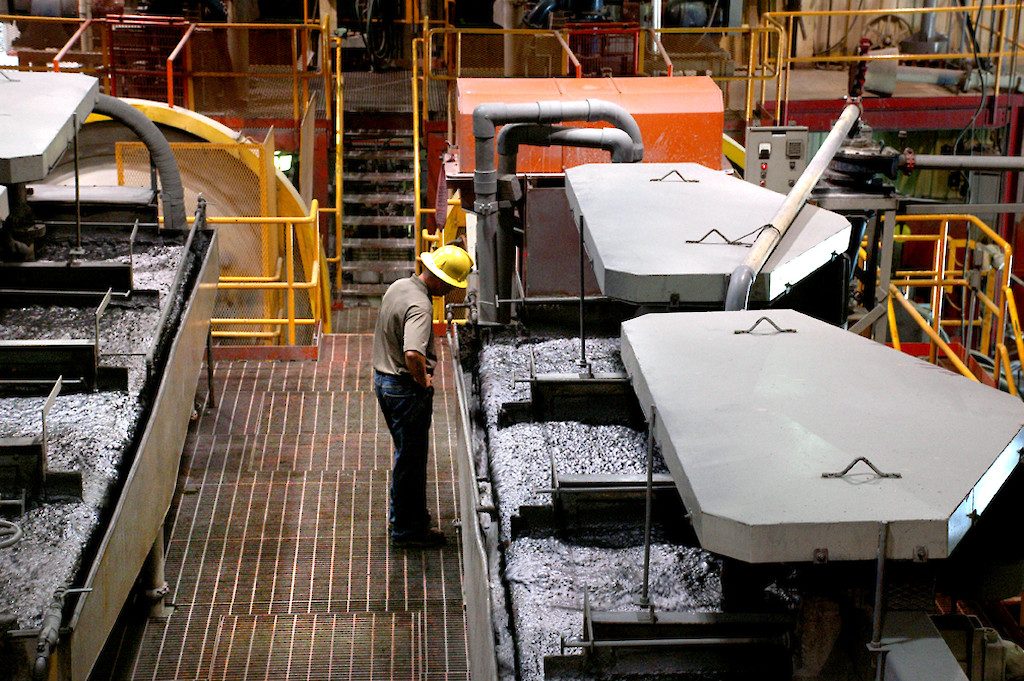
Americas Gold and Silver (TSX: USA; NYSE-A: USAS) reported weaker-than-expected silver production in the third quarter amid ongoing infrastructure work at its main Galena complex in Idaho. Silver production in…